
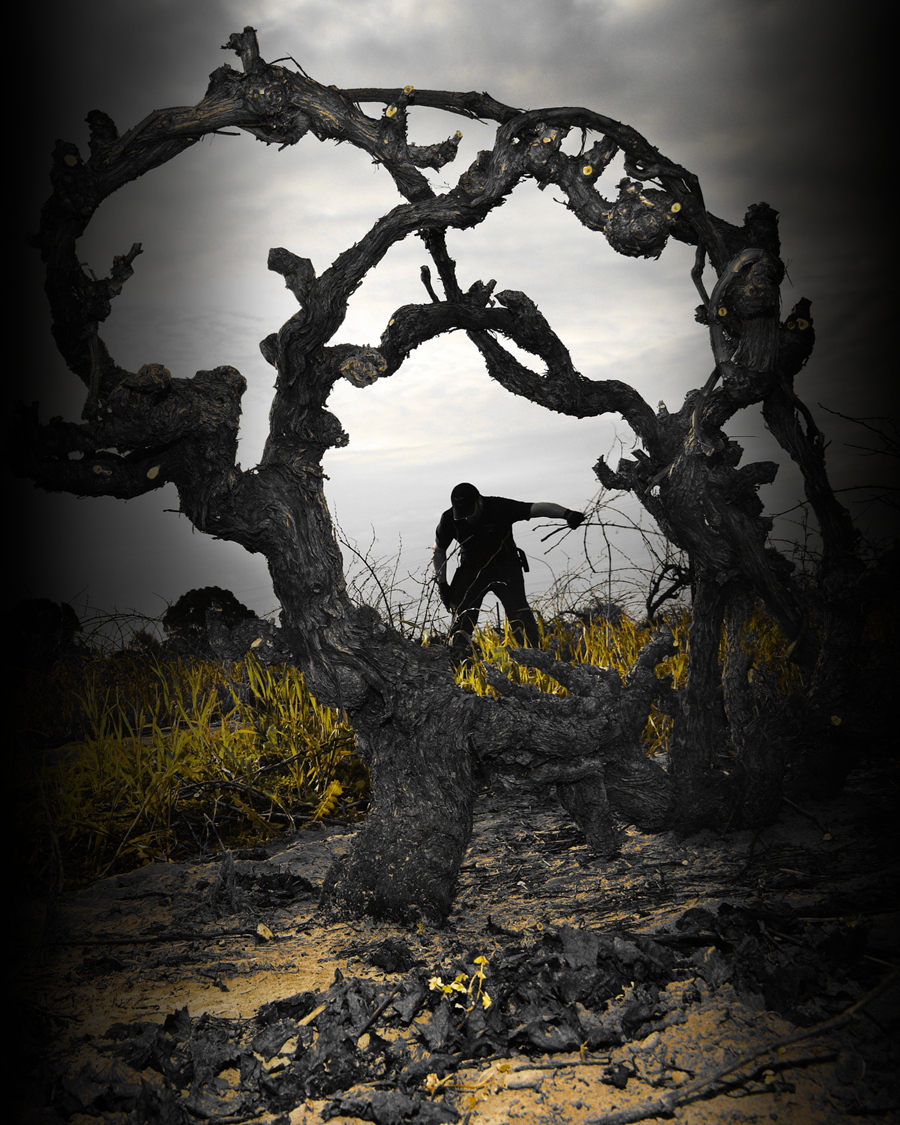
Perhaps the first wine-related thesis I've ever written - but this one deserved all the hours. The subject? The oldest surviving Grenache vines on the planet, planted in 1848. Today, we unveil the extraordinary 2019 Cirillo 1850 Ancestor Vine Grenache, and we couldn't be more delighted to be working directly with Marco Cirillo and Annika Lehmann. An important sample shipment arrives on Monday, including this remarkable wine together with: • 2021 1850 Ancestor Vine Semillon After their long journey from Australia, I'll give the wines a few days to settle before sharing full tasting notes and the stories behind each bottle on Friday 31 July. Save for the obvious, 100-point Standish releases, which seem to attract more trade attention than Taylor Swift's latest headline - we've already, at least theoretically, sold our entire allocation of the 2019 Cirillo 1850 Ancestor Vine Grenache to a single trade customer. However, as always, our private customers come first. That has been our philosophy from day one and it isn't about to change. Every bottle will be offered to our private clientele before a single case is released to the trade. Once you've had your opportunity, our trade partner stands ready to purchase whatever remains. In today's wine market, that's a rather enviable position to find ourselves in. Delivery: We're currently working with Hillebrand to secure an entire dedicated container exclusively for The Vinorium. On board will be the new collections from Standish, Stonier, Cirillo and Sidewood - just over 5,400 bottles in total. The shipment will travel on a direct sailing rather than via the slower groupage service, meaning a faster journey with an anticipated UK arrival in late October / to early-November, comfortably ahead of Christmas. 
“This is as good as Barossa Grenache gets.” 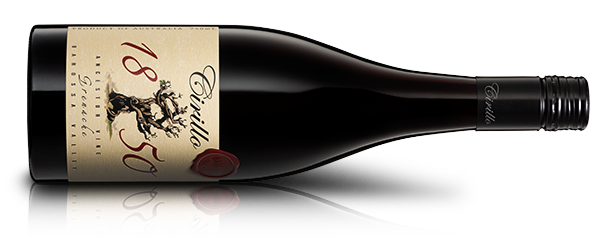
2019 '1850' Ancestor Vine Grenache 99+ Points - Angus Hughson, Winepilot and Vinous “This stunning young 2019 Grenache Ancestor vine, from the country’s oldest vines for this variety delivers an almost perfect mix of pristine primary dark cherry and red licorice aromas lifted by layers of mountain herbs, red earth and meat spices with genuine concentration and focus. Young, compact and still a little shy, it has all the pieces in place with energetic flavours, beautiful composure and refinement yet with a firm base of gravelly tannins before gliding to a pristine finish of astounding length. With the perfume of the 2017 vintage combined with the density of tannins from a year marked by long periods of dry, warm to hot conditions, this is as good as Barossa Grenache gets and may achieve perfection in time.” £42.50 per bottle Also available under bond - £185.00 per case (6x75cl) 
The Inheritance of Time In a quiet corner of the Barossa Valley, on deep sandy soils at Light Pass, a vineyard planted in 1848 continues to produce Grenache and Semillon. It is widely regarded as the oldest continuously producing Grenache vineyard in the world, while its Semillon ranks among the oldest surviving plantings of the variety anywhere. Those facts alone make the vineyard remarkable, yet they reveal surprisingly little about why it matters. Age has an irresistible attraction. Whether we stand beneath an ancient oak or admire a medieval cathedral, we instinctively recognise that time has bestowed something impossible to recreate. Vineyards are no different. Every year that passes deepens their significance, not because old vines are inherently better than young ones, but because survival on such a timescale is extraordinarily unlikely. Disease, drought, changing fashions, economic hardship and simple human impatience have claimed countless vineyards over the past two centuries. Ancient vineyards are rare because history is rarely kind to them. The true significance of the Cirillo vineyard lies not simply in the fact that it survived, but in the countless decisions that allowed it to do so. For almost one hundred and eighty years, generation after generation inherited responsibility for these vines. At every stage, there were opportunities to replace them with younger, more productive plantings or with varieties that reflected changing commercial tastes. Across Australia, many historic vineyards disappeared for precisely those reasons. This one did not. It remained because successive custodians looked beyond immediate reward and recognised that they were preserving something whose full importance might only be appreciated by future generations. That idea sits at the heart of this story. It is not simply the history of a vineyard, nor is it an account of one family or one wine. It is a story about stewardship, patience and continuity; about people who understood that some things acquire their greatest value only through the passage of time. Every bottle produced from these vines represents far more than a single growing season. It reflects almost two centuries of accumulated judgement, quiet perseverance and respect for what came before. Modern life encourages us to celebrate innovation. Wine occasionally asks us to celebrate the opposite. The Cirillo vineyard reminds us that genuine rarity cannot be manufactured, hurried or purchased. Time remains the one ingredient no winemaker can ever control. It can only be inherited, protected and, if fortune allows, passed to the next generation. That simple truth explains why this modest parcel of Barossa sand occupies such an important place in the history of Australian wine. 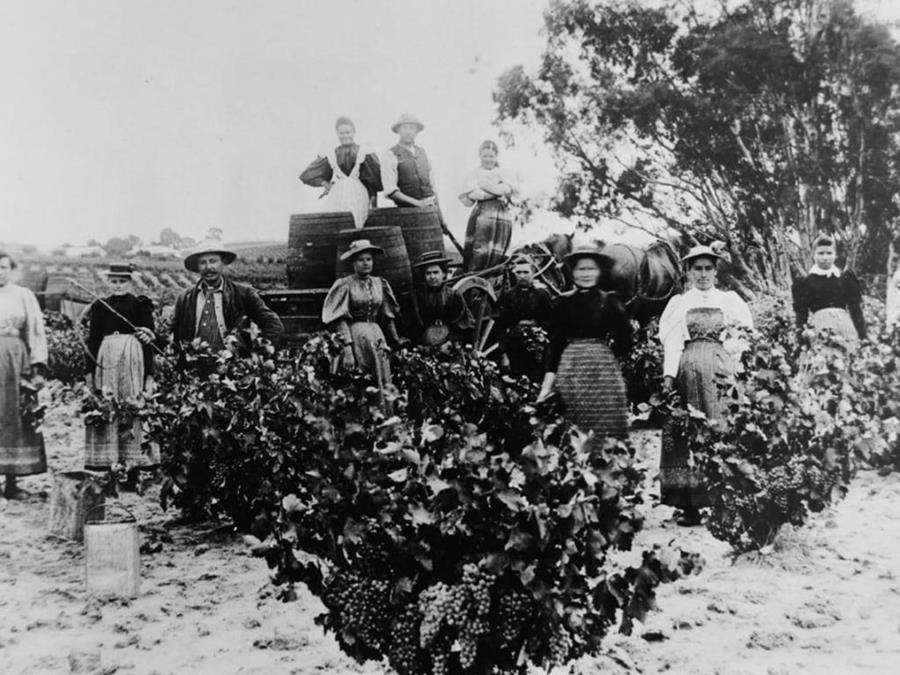
1848 When the first Grenache and Semillon vines were planted at Light Pass in 1848, South Australia was still in its infancy. Barely twelve years had passed since the colony had been proclaimed, and much of the Barossa remained a sparsely settled agricultural frontier. Vineyards were few, roads were rudimentary and the idea that Australia might one day become one of the world's great wine-producing nations would have seemed implausible to almost everyone living there. Those establishing farms in the district were not attempting to create history. They were simply trying to build secure and productive lives in an unfamiliar country. Many of the settlers arriving in the Barossa during this period were German Lutherans from Prussia and Silesia (now parts of Germany and Poland) who fled religious persecution. They brought little that could not be carried across oceans, yet among their most valuable possessions were traditions of farming, craftsmanship and viticulture that had been shaped over generations. Vine cuttings travelled with them not merely because they offered the prospect of wine, but because they represented continuity with the lives they had left behind. Planting a vineyard was both a practical and deeply symbolic act. It demonstrated confidence that this new land could become home, not only for themselves but for their children and grandchildren. Seen through modern eyes, it is easy to overlook the optimism such a decision required. Unlike annual crops, vineyards demand years of investment before they begin to reward their owners. The first growers knew that much of the work they undertook would benefit people they might never live to meet. They accepted that reality because vineyards have always been expressions of faith as much as agriculture. They are among the few enterprises where today's labour is undertaken with the expectation that tomorrow's generations will inherit the greatest rewards. Nothing about the young vineyard suggested that it would become exceptional. The vines were slender, vulnerable and entirely dependent upon careful management during their early years. Drought remained an ever-present threat, farming was physically demanding and every harvest carried uncertainty. Had a traveller walked through those rows in 1848, there would have been nothing to distinguish them from countless other new vineyards being established across the colony. Their future importance lay hidden beneath the surface, quite literally, as the vines slowly extended their roots deeper into the ancient sands of Light Pass. History rarely announces itself as it unfolds. More often, it disguises itself within ordinary acts of perseverance. A field is planted. A boundary wall is built. A vineyard is pruned. Only with the passing of decades does it become apparent that these seemingly routine decisions have shaped something far greater than anyone intended. The Cirillo vineyard belongs firmly within that tradition. Its founders believed they were establishing another productive farm. They could not possibly have imagined that nearly one hundred and eighty years later those same vines would be recognised as one of the most significant surviving vineyards in the world. As the Barossa gradually developed into Australia's foremost wine region, the vineyard matured almost unnoticed. Seasons passed, trunks thickened and roots travelled ever deeper beneath the sand. Around it, families prospered and struggled, settlements expanded and the landscape slowly acquired the vineyards and wineries that define it today. Throughout those changes, the vines continued their quiet work, responding only to the rhythm of the seasons. They possessed no awareness of their future significance, nor did those tending them. Yet with every harvest they accumulated something no human effort could accelerate: time. Looking back from the perspective of the twenty-first century, the remarkable achievement of the 1848 planting is not simply that it survived. Thousands of vineyards established during the nineteenth century have long since disappeared, replaced by more fashionable varieties, more productive clones or entirely different land uses. The true distinction of this vineyard lies in its continuity. Every generation chose preservation over replacement, often without any expectation that such decisions would one day attract recognition. It is precisely that quiet sequence of choices, repeated over almost two centuries, that transformed an ordinary nineteenth-century vineyard into one of the most extraordinary survivors in Australian viticulture. The story of Cirillo therefore begins long before the Cirillo family themselves. It begins with those first growers. What they planted in 1848 was more than a collection of vines. They planted the foundations of a legacy that continues to shape Australian wine today. 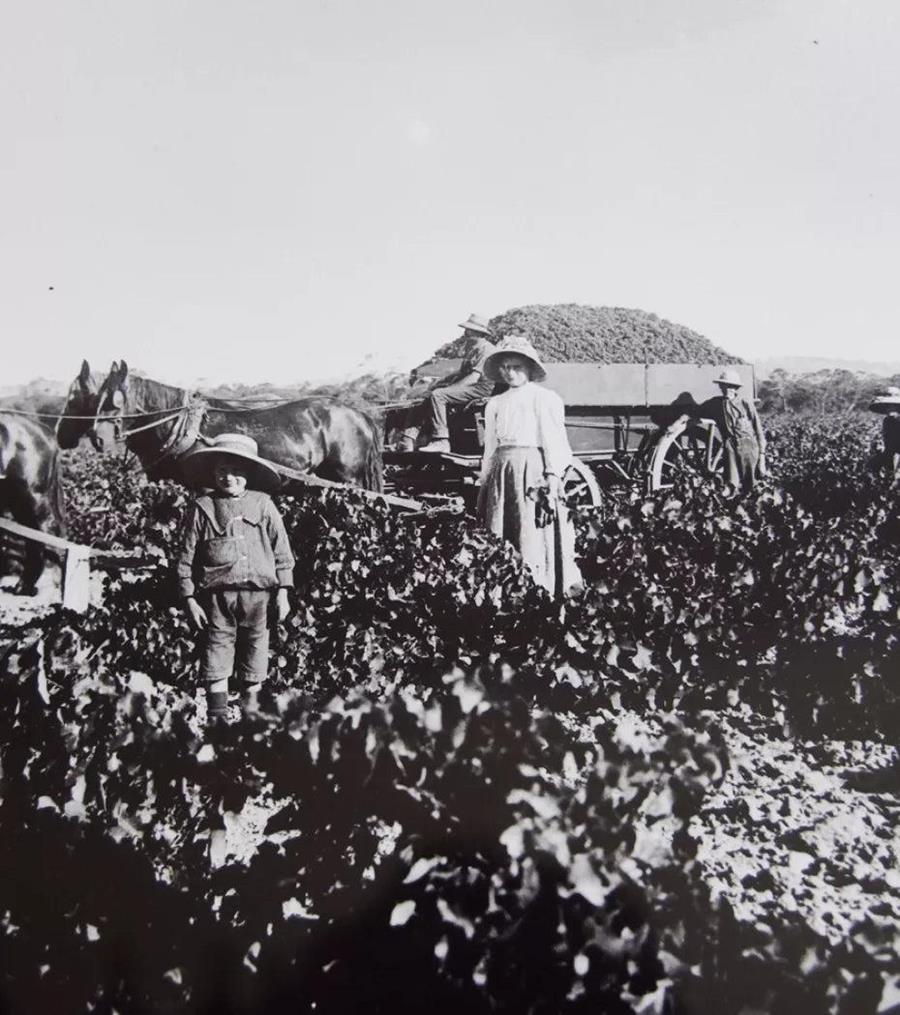
The Vineyard That Refused to Die It is tempting to imagine that the survival of the 1848 vineyard was somehow inevitable. Nothing could be further from the truth. Its continued existence depended upon an uninterrupted series of decisions, each one made in its own time and for its own reasons, any one of which might easily have ended the story. The second half of the nineteenth century transformed the Barossa Valley. What had begun as a scattering of farming communities gradually evolved into one of Australia's most important wine regions. Vineyards multiplied, family wineries emerged and the district acquired a reputation for producing generous, dependable wines that reflected both the climate and the skills of its growers. Yet growth brought change. As markets developed, so too did expectations. Vineyards increasingly became commercial enterprises rather than simply mixed farms, and decisions that had once been guided by tradition were now influenced by economics. Meanwhile, events unfolding on the other side of the world would alter the course of wine forever. During the latter half of the nineteenth century, phylloxera devastated the vineyards of Europe, destroying millions of vines and forcing entire regions to rebuild on American rootstocks. South Australia escaped that catastrophe and remains one of the very few significant wine regions in the world where many vineyards continue to grow on their own roots. It is one of the defining advantages of Australian viticulture, allowing ancient vineyards such as this to survive exactly as they were planted. Their trunks, roots and genetic identity remain unbroken, creating a direct connection to the nineteenth century that is almost impossible to find elsewhere. Yet freedom from phylloxera did not guarantee survival. Ancient vineyards are vulnerable for reasons that have little to do with disease. They grow slowly, produce tiny crops and demand patience from those who farm them. Younger vineyards often offer higher yields, easier management and quicker financial returns. Throughout the twentieth century, as viticulture became increasingly modernised, many growers quite understandably replaced ageing vines with more productive plantings. From a commercial perspective, such decisions were often entirely rational. From the perspective of history, they represented irreversible loss. Grenache illustrates this changing landscape perfectly. For much of the twentieth century it was valued less as a noble variety than as a reliable contributor to fortified wine production and inexpensive blends. As consumer tastes evolved and table wines gained prominence, Shiraz increasingly became the defining red grape of the Barossa. Many Grenache vineyards were removed altogether or grafted to varieties considered more fashionable and commercially attractive. By the time Grenache enjoyed its modern renaissance, countless historic vineyards had already disappeared beneath the bulldozer. Government policy accelerated that process. Various vine-pull schemes encouraged growers to remove older vineyards in an effort to address oversupply and reshape the Australian wine industry. For many families, accepting those incentives made perfect financial sense. Farming has always required difficult decisions, and few could justify preserving unproductive vineyards simply because they were old. Across Australia, thousands of hectares vanished within a remarkably short period, taking with them irreplaceable chapters of viticultural history. The remarkable thing about the vineyard at Light Pass is not that it escaped a single threat. It escaped them all. Economic downturns, changing fashions, periods of low demand, advances in vineyard technology and repeated opportunities to replace old vines with younger, more profitable plantings all passed through the Barossa. Still the vineyard remained. Each season that followed represented another quiet decision to continue, another year in which continuity prevailed over convenience. Looking back, it is easy to attach inevitability to survival. At the time, however, nothing was inevitable. Those responsible for these vines could not have known that future generations would prize old-vine Grenache, celebrate heritage vineyards or travel halfway around the world to stand among trunks planted before Australia became a nation. They were simply making practical decisions based upon the circumstances before them. Ironically, it was precisely that absence of grand ambition that ensured the vineyard's survival. It was never preserved as a museum piece. It remained a working vineyard, cared for because it continued to justify the faith placed in it. That distinction matters. The Cirillo vineyard survived not because history protected it, but because ordinary people did. Its continued existence reflects nearly two centuries of practical stewardship rather than conscious preservation. Every surviving vine represents countless hours of pruning, cultivation and harvest undertaken by people who regarded themselves not as guardians of history but simply as farmers. History would eventually recognise the significance of their work. The Quiet Years History has a curious habit of concentrating on moments of recognition while overlooking the decades that made such recognition possible. Awards, critical acclaim and international attention are easily recorded because they arrive with dates, photographs and headlines. Far more difficult to document are the long, uneventful years during which nothing apparently happened. Yet it is often within those forgotten decades that the most important stories quietly unfold. For much of its life, the vineyard at Light Pass attracted remarkably little attention. It was not a destination for wine tourists, nor did journalists travel across the world to write about its remarkable age. There were no collectors seeking tiny allocations of ancient-vine Grenache and no waiting lists for museum-release Semillon. The vineyard simply fulfilled the role expected of it, producing fruit year after year with little fanfare and even less recognition. This absence of attention proved, in retrospect, to be one of its greatest strengths. Freed from expectation, the vineyard continued to evolve according to the natural rhythm of the seasons rather than the demands of fashion. Its value remained rooted in agriculture rather than prestige. Each winter brought pruning, each spring renewed growth, each summer the anxious watch for weather and each autumn another harvest. The cycle repeated with reassuring consistency. There is something profoundly reassuring about vineyards that continue to measure time in seasons rather than decades. Long before sustainability became part of the modern vocabulary, growers understood that healthy vineyards demanded restraint, observation and respect for natural balance. Ancient vines reward impatience poorly. Their value lies not in maximising production but in preserving equilibrium, allowing each vintage to express both place and season with honesty rather than manipulation. Every harvest quietly extended a story that had already outlived most human endeavours. The trunks thickened almost imperceptibly, their twisted forms recording each passing decade in wood rather than ink. Deep beneath the surface, roots continued their patient exploration of the ancient sands, drawing sustenance from soils they had known for generations. Above ground, life appeared reassuringly ordinary. Beneath the surface, time was performing work that no amount of human intervention could ever accelerate. It is tempting to believe that history is shaped by remarkable individuals. More often, it is shaped by countless acts of consistency repeated over many years. Someone recognised disease before it spread. Someone pruned with care rather than haste. None of those decisions warranted celebration. Together, they explain why the vineyard still stands today. Perhaps that is the greatest lesson offered by the Cirillo vineyard. Endurance rarely arrives through dramatic moments of heroism. More often, it is the cumulative result of ordinary people doing ordinary things exceptionally well over an extraordinarily long period of time. Those quiet years, so easily overlooked in historical accounts, proved every bit as important as the milestones that followed. Without them, there would have been no ancient vineyard left for later generations to admire, and no story left to tell. The Custodians By the time Vincent Cirillo acquired the vineyard in the early 1970s, it had already survived well over a century of Australian history. It had witnessed the Barossa emerge from scattered settlement to internationally respected wine region, yet despite its remarkable age, the vineyard remained largely unknown beyond those who worked the land and understood the quality of its fruit. To view Vincent's purchase simply as a property transaction would be to misunderstand its significance. He did not purchase a celebrated landmark. He inherited responsibility for a working vineyard. The vines were old, their yields modest and their commercial potential far from obvious. At a time when many growers were replacing ageing vineyards with younger, more productive plantings, preserving such an old site demanded both patience and conviction. There were undoubtedly easier ways to make a living. Vincent approached the vineyard not as a collector preserving a museum piece, but as a farmer determined to understand it. Every season reinforced the character that decades of quiet stewardship had created. The deep-rooted vines responded differently to heat and drought than younger vineyards. They produced naturally modest crops, but fruit of remarkable concentration, balance and consistency. Long before "old-vine Grenache" became one of the most admired categories in Australian wine, Vincent recognised that these vines possessed an individuality impossible to reproduce elsewhere. For many years, however, that individuality reached consumers through other names. The vineyard's fruit found its way into wines produced by some of the Barossa's most respected estates, including Rockford, Peter Lehmann, St Hallett and Torbreck. Those wineries understood the value of the vineyard. Although the labels changed, the character of the fruit remained constant, quietly contributing depth and complexity to wines that helped establish the Barossa's international reputation. There is something fitting about those years. The vineyard was influencing Australian wine without demanding recognition for itself. It was content to speak through others, continuing the quiet pattern that had defined its existence since 1848. Recognition was never the objective. Stewardship was. Marco Cirillo (son of Vincent) grew up within that environment. For him, the vineyard was a part of everyday life. The twisted trunks, the rhythm of pruning and harvest, the endless cycle of seasons - these were simply the backdrop to his childhood. Yet familiarity often provides the deepest understanding. Living among ancient vines teaches lessons that cannot be acquired from books or laboratories. It encourages observation over intervention, patience over haste and respect over control. As Marco gradually assumed greater responsibility for the vineyard, he inherited something far more valuable than land. He inherited accumulated judgement. Every generation had left behind practical knowledge shaped by experience rather than theory. Understanding how the vines responded to drought, when to harvest, where not to interfere and, perhaps most importantly, when to trust the vineyard itself had become part of an unbroken tradition stretching back generations. That continuity explains much about the wines that would eventually bear the Cirillo name. They are not attempts to impose a winemaker's personality upon ancient vines. Rather, Marco's role is not to redefine the vineyard but to ensure that it continues speaking in its own unmistakable voice. Stewardship is a word used frequently in wine, sometimes so frequently that it risks losing meaning. At Cirillo, however, it seems entirely appropriate. Ownership implies possession. Stewardship implies responsibility. The distinction is profound. Ownership lasts only for a lifetime. Stewardship accepts that every generation is merely a temporary guardian of something that existed long before its arrival and, if cared for wisely, will continue long after it has gone. 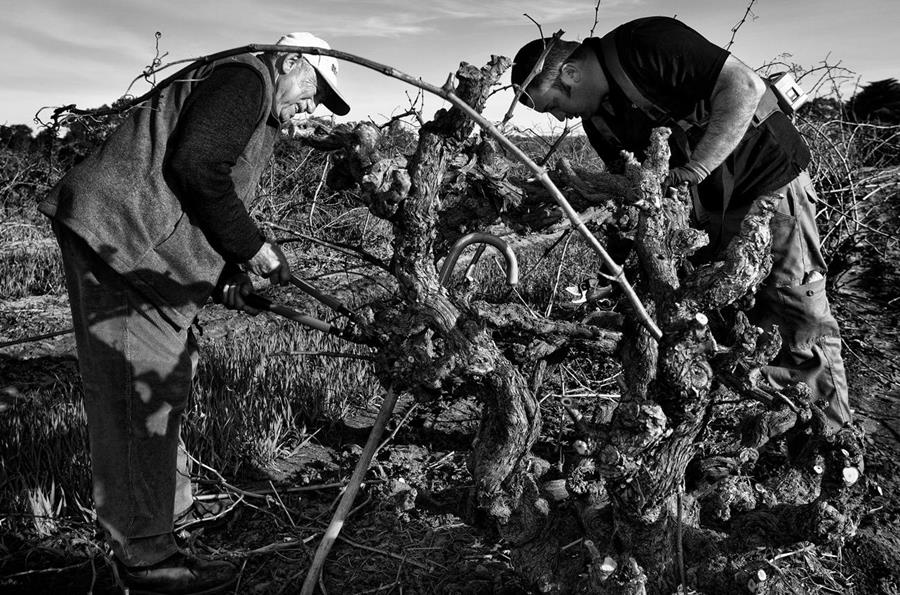
What Time Tastes Like The modern fascination with old vines often begins with a simple assumption: older vines produce better wine. Like most simple assumptions, it is only partly true. Age, by itself, guarantees nothing. Neglected vineyards do not become great merely because they survive. Ancient vines still require careful farming, thoughtful pruning and sympathetic winemaking. Yet when exceptional sites are nurtured over many decades, something remarkable begins to emerge. The vineyard achieves a balance that cannot be manufactured within a human lifetime. The vines at Light Pass now possess root systems that have spent almost two centuries exploring the deep sandy soils beneath the Barossa. Their roots descend far beyond the reach of younger vineyards, allowing them to draw moisture and nutrients from remarkable depths while responding to seasonal conditions with extraordinary resilience. This natural equilibrium contributes not only to the consistency of the vineyard but also to the quiet confidence with which it expresses place. The finest old-vine wines rarely impress through sheer size. Instead, they possess an effortless harmony, a sense that every element has found its proper place without force or exaggeration. That philosophy lies at the heart of Cirillo's approach to winemaking. The objective is not to manufacture complexity, but to reveal it. Gentle handling, restrained oak and thoughtful maturation allow the vineyard's personality to remain at the forefront. The wines are not exercises in technique; they are expressions of continuity. Every vintage reflects the season in which it was grown while remaining unmistakably connected to the place from which it came. Grenache provides perhaps the clearest demonstration of this relationship. In the hands of sensitive growers and from exceptional vineyards, Grenache has revealed an extraordinary ability to communicate nuance, fragrance and texture while retaining remarkable transparency to site. The ancient vines at Light Pass embody that transformation. They have witnessed the variety's changing fortunes from relative obscurity to international admiration without themselves changing at all. The Semillon tells a similarly compelling story. Planted alongside the Grenache in 1848, it represents another living connection to the earliest years of Australian viticulture. While fashions have repeatedly shifted around it, the vineyard has continued producing fruit that reflects both the longevity of the site and the quiet confidence of a variety capable of extraordinary grace with age. Together, the Grenache and Semillon form a rare partnership, offering two distinct interpretations of the same landscape through vines that have shared nearly two centuries of history. Perhaps that is what time ultimately tastes like. Not age in isolation, but continuity. Not power, but perspective. Wines from ancient vineyards remind us that greatness is seldom created in a single vintage. It accumulates gradually through thousands of ordinary decisions, each one building upon the judgement of those who came before. Every bottle therefore represents far more than the work of one season or one winemaker. It carries within it an unbroken conversation between land, vine and people that has continued, almost uninterrupted, since 1848. For that reason, the wines of Cirillo should not be regarded simply as rare bottles from old vines. They are the latest chapter in a story that began almost two centuries ago and continues with every harvest. To taste them is not merely to experience remarkable Grenache or Semillon. It is to encounter a living piece of Australian wine history, preserved not by chance, but through the quiet determination of generations who understood that some things become more valuable with every passing year. Recognition Throughout much of the twentieth century, wine was judged primarily by reputation, region and producer. Vineyard age rarely entered the conversation. Consumers expected consistency, generosity and reliability rather than discussions of vine age or genetic heritage. Ancient vineyards were respected by growers because they understood their character, but they were seldom celebrated by the wider market. Their greatest value lay in the quality of the fruit they produced rather than the history they embodied. During the closing decades of the century, however, attitudes began to change. Across Australia, a new generation of winemakers started questioning assumptions about what constituted greatness. Rather than pursuing ever greater ripeness, extraction and oak influence, attention gradually returned to vineyard expression. Grenache underwent an extraordinary reassessment. Sensitive handling revealed a grape capable of remarkable perfume, elegance and transparency, qualities that ancient vineyards expressed with particular clarity. Within that broader movement, vineyards such as Cirillo assumed new importance. They were no longer viewed simply as productive pieces of farmland but as living archives of Australian viticulture. Their own-rooted vines preserved genetic material that had disappeared from many parts of the world. Their trunks recorded nearly two centuries of uninterrupted growth. More importantly, they demonstrated that Australia possessed something almost unique among major wine-producing nations: a remarkable concentration of nineteenth-century vineyards that had escaped both phylloxera and wholesale redevelopment. Recognition followed gradually rather than suddenly. Journalists, historians and collectors increasingly sought out these surviving vineyards, recognising that they represented more than exceptional wine. They offered an unbroken connection to the earliest chapters of Australian viticulture. As appreciation of old-vine Grenache continued to grow internationally, the vineyard at Light Pass assumed its rightful place among the country's most significant historic sites, not because it had changed, but because the wine world had finally learned how to value what had always been there. The story contains an important lesson. Great vineyards do not become great when critics discover them. They become recognised. The distinction matters. Recognition is society catching up with history. The vineyard itself remains unchanged, continuing to follow the same rhythm it has observed since 1848, indifferent to reputation, awards or international acclaim.
Australia's Living Heritage The story of Cirillo cannot be understood in isolation. It forms part of a much larger and, in many respects, uniquely Australian narrative. While Europe quite rightly occupies a central place in the history of wine, many of its oldest vineyards have been fundamentally reshaped over the past century and a half. The arrival of phylloxera during the nineteenth century forced the widespread replanting of vineyards across France, Spain, Italy and much of the wider wine world. Although those regions retained their traditions and many historic sites, the original vines themselves were largely lost. Australia's story unfolded differently. South Australia's rigorous quarantine measures prevented phylloxera from establishing itself across much of the state, allowing many nineteenth-century vineyards to survive on their own roots. The significance of that achievement becomes clearer with every passing decade. These vineyards are not simply old. They remain direct botanical descendants of the original vines planted by European settlers, preserving both their genetic identity and their uninterrupted relationship with the land. This distinction places a particular responsibility upon Australia. Ancient vineyards are finite resources. Once removed, they cannot be recreated within any meaningful human timescale. New vineyards may eventually become old, but none alive today will witness a bicentenary within the lifetime of anyone reading these pages. The choices made by today's custodians will therefore shape what future generations inherit, just as the decisions of nineteenth-century growers shaped the opportunities available to us. That responsibility has inspired renewed efforts to identify, catalogue and celebrate Australia's surviving old vineyards. Classification systems now recognise vineyards according to age, acknowledging not only their rarity but also the cultural significance they represent. Such initiatives encourage growers, consumers and historians alike to view vineyards not merely as agricultural assets but as part of Australia's national heritage. Within that broader landscape, the Cirillo vineyard occupies a position of exceptional importance. It stands not simply as the oldest continuously producing Grenache vineyard in the world, but as tangible evidence of Australia's unique contribution to global wine history. The vineyard demonstrates that heritage need not be confined to museums, archives or historic buildings. Sometimes it continues growing quietly in the soil, producing another vintage while history unfolds around it.
The Responsibility of Inheritance Every generation inherits two things from the past: the decisions that were made and the opportunities that remain. The history of the Cirillo vineyard is ultimately shaped by both. Those who planted the first vines in 1848 could never have anticipated the significance their work would one day acquire. Equally, those who cared for the vineyard throughout the decades that followed were seldom motivated by thoughts of historical importance. They simply understood that some things were worth preserving. That understanding now rests with the current custodians. Modern viticulture offers more knowledge, better equipment and greater scientific understanding than any previous generation could have imagined, yet it cannot replicate what already exists beneath the sandy soils of Light Pass. Nearly two centuries of uninterrupted growth cannot be accelerated through technology or purchased through investment. They can only be respected. Perhaps that explains why the language of stewardship feels more appropriate than ownership. Ownership implies permanence, yet every proprietor eventually becomes part of the vineyard's history rather than its future. Stewardship accepts something altogether humbler: that each generation occupies only a brief chapter within a story that began long before its arrival and, with good fortune, will continue long after it has gone. The Cirillo family understands that distinction. Their task has never been to reinvent the vineyard, nor to impose modern fashion upon it. Instead, they have sought to reveal its character while ensuring that those who follow will inherit the same opportunity. Such an approach demands restraint as much as ambition. It asks each generation to think beyond immediate reward and recognise that the greatest achievements in agriculture are often measured not in annual profits but in decades and centuries. There is, ultimately, something profoundly hopeful about that idea. In an age increasingly defined by immediacy, ancient vineyards remind us that patience remains one of humanity's most valuable virtues. They encourage us to think beyond our own lifetimes and to recognise that genuine legacy is rarely created quickly. It is accumulated gradually through thousands of careful decisions, each one building upon the judgement of those who came before. The vineyard at Light Pass has now witnessed almost one hundred and eighty years of Australian history. It has survived because generation after generation chose continuity over convenience, responsibility over expediency and stewardship over short-term gain. The greatest tribute offered to those early growers is not admiration alone, but the determination to ensure that future generations inherit the same extraordinary vineyard. There are vineyards that produce outstanding wines and there are vineyards that define regions. Very occasionally, there is a vineyard that transcends both. The vineyard at Light Pass has witnessed the transformation of a young British colony into one of the world's great wine-producing nations. It has survived drought, economic uncertainty, changing fashions and the continual temptation to begin again with younger vines. Through it all, it has continued to do exactly what it was planted to do in 1848: quietly produce fruit of remarkable character from the same ancient sands. That continuity is its greatest achievement. The wines will continue to evolve. Winemakers will change. Future generations will undoubtedly discover new ways of understanding this remarkable site. Yet the vineyard itself remains the constant, connecting today's harvest with those gathered almost two centuries ago. Every bottle produced from these vines therefore carries two dates. One appears on the label. The other lies beneath the surface of the vineyard, hidden among roots that first entered the sands of Light Pass in 1848. The vintage tells us when the wine was made. The vineyard tells us how long it has been becoming… 
A Little Summer Pause… August has traditionally been the quietest month at The Vinorium. Schools break up for the summer, many of our customers head off on holiday, and, for many years now, we have followed suit with our own old-fashioned factory shutdown. After a busy first half of the year, we will be taking a well-earned week's holiday. Our offices will close at the end of business on Friday 7 August, and we will return, bright-eyed and bushy-tailed, at 7:00am on Monday 17 August. The last dispatch before we head for the mountains will leave us at 1:00pm on Thursday 6 August. All orders received after this cut-off will be dispatched on Monday 17 August. 

|
