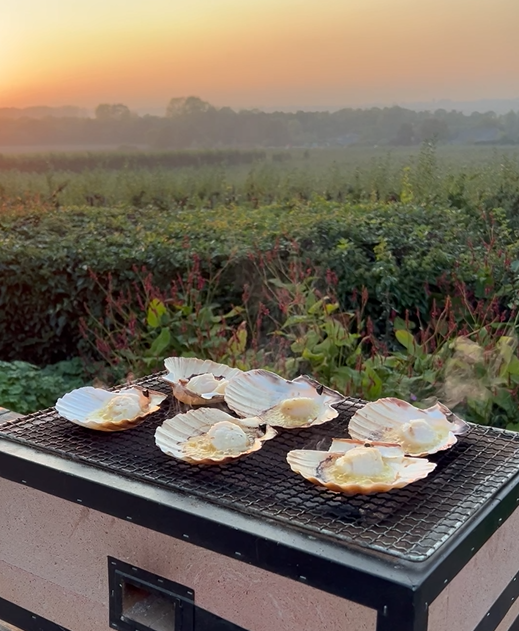
  Konro grill, disco scallops, and the most wonderful view…  My Friday night treat consists of freshy caught scallops cooked on my favourite Konro grill. When the weather permits, I try to cook outdoors at least three-to-four times a week. It’s certainly good for the soul and keeps me away from all the nonsense on our televisions… All cooking and tastes are personal however, these are my tips for cooking on the Konro grill. Firstly, I walk around my garden collecting twigs and any dead wood that has fallen since my last foray. It’s an ideal time to reconnect to all that is happening as my garden changes by the day. On the fence border in the lower wooded area – I share this space with a beautiful, female fox. She’s been with me for a few years and remains shy. I enjoy watching her as she patrols the garden borders. There’s an abundance of squirrels and rabbits however, she’s not doing a very good job of keeping their numbers down. Soon, I expect to see her cubs, which are cute as can be. Nearby, the badgers have their home, they squeeze under the gate and waddle through the mass of common comfrey, which the bumblebees adore. I know it’s them as their fat (low to the ground) bellies have completely crushed a path all the way back to their set. My honeybees are in good shape this year. I tend to take a natural approach as I am not a fan of continually opening their hive as it’s a stressor for them. Essentially, it disrupts their routine and can trigger their "fight-or-flight" response, which I am keen to avoid. It’s also that time of year to lookout for a weakening colony, European hornets and the worse threat of all, Asian hornets. As of 9 May - 13 credible Asian hornet sightings have been reported in the UK this year and 2 nests have been found. Of those 13 – 9 are in Kent and some very close to my home. Despite living next to an unfathomable number of apple trees, I planted my own orchard a few years back. Mixed, heritage apples, several pears and cherries, and they’re all looking in good shape as are the enormous, arching blackberry stems – some exceeding over fifteen feet in length. Ditto for my raspberries and gooseberries however, it’s always a fight against the birds. Badgers also love my goosegogs. On the way back to my eating spot – I collect all my fresh herbs to compliment my evening’s meal. In truth, I cannot stand supermarkets, and I cannot abide the prices – it’s daylight, bloody robbery and much of the fresh produce is flavourless. I use Sumi Bincho charcoal however, they require some heat to get them going (hence all the twigs). These are by far the best and crafted from dense hardwoods using traditional centuries-old methods (no unpleasant odours, makes it perfect for preserving natural flavours while cooking). Once going, they burn super-hot and can last several hours. Another asset being their reusability. I have a bucket of cold water at the ready – once my cooking is complete I plonk all the charcoal in the water. Immediately, the water boils into life (showing the high temperature of the charcoal). I tip them out onto the path and leave them to dry for a day or two. Often, I enjoy three cooks from the same coals. Disco scallops cooked in their half shell are a real treat. I simply, add a huge dollop of homemade garlic and herb butter to the shell and plop the scallop on top. A few minutes of watching them bubble is all that it takes. Exquisite, sweet tasting scallops followed with the obligatory dunking of bread into the garlicy juices. No plates are required as I eat straight from the shell. I also keep all my shells and crush them for my raised, vegetable beds. Slugs hate them, which keeps my growing produce safe… Two years ago, Devon marine scientist Dr Robert Enever discovered that scallops could be caught using the illuminated pots, attracted by LED lights, which is much better compared to dredging the ocean floor, which is destructive to marine habitats and species. Illuminated crab pots, dubbed ‘scallop discos’ are becoming more popular and are, by their very nature, a seabed-friendly alternative. Great name, too… Yes, they are more expensive than their dredged friends however, the quality of flavour is much better. In addition, there is less preparation as ‘dredging’ drags in all the crud from the floor, which requires a thorough cleaning. Friday evening is also the time to sit back and enjoy a few opened samples in a more informal, relaxed environment. I / we have been spoilt this week as 30-bottles arrived from the Margaret River and Tasmania. I must doff my cap to DHL who regularly collect samples from anywhere in Australia (including Tasmania) and deliver to me within 7-days. That said, it’s an investment for the winery at $500 per 12-bottles. For the first time - our Tassie offerings are non-existent which is a crisis point. We have been promised samples from Nick Glaetzer-Dixon for God knows how long. We have finally given up asking. Another crux being the new export price for Avance, which has shot up versus most of our previous offerings being sold at discounted prices. Clearly, this does not make for sensible commercials and reason why we had no intention of offering the new vintage. Our door remains open to Nick however, a girl can't keep chasing! Samples from Tassie based, Two Tonne founder and winemaker, Ricky Evans arrived on Monday. Tasmanian Chardonnay and Disco scallops will be a heavenly partnership… Ricky is widely considered one of Tasmania's most dynamic winemakers, yet he’s down to earth, and really keen to see his wines in your glasses. His 2024 Havilah OGG was a great introduction and teaser, “Typically the core of this is schonburger, musque clone chardonnay, gris & a splash of gewurtz. This vintage was super condensed, so we had most of these components in the winery around the same time, so this is how it played out. Musque chardy, gewurz & schonburger all co-fermented, 100% destemmed in open top fermenter, left on skins untouched for about 3.5 weeks. The gris was separate, nice fast ferment, then pressed off when dry, pretty much treated like one of our pinots,” to quote, Ricky. Essentially, this is an addictive skin contact wine that makes you feel excited, and certainly perks me up. The bad news being – it has sold-out in Tasmania! I have already sampled the three sub regional Pinot Noirs. ’24 EST is a special release and sourced from the East Coast of Tasmania, with the intention of highlighting regionality within their island state. This was outright delicious and will comfortably take the place of Avance. We do not sugarcoat – this is better than Avance… The rest is being sampled today and tonight. We expect to place our first order next week. More news will follow soon… We’ve demolished all the samples from Margaret River hot shot, Nic Perkins of L.A.S. Vino. As previously penned, Nic comes from Margaret River winemaking royalty. His parents are Dr Mike Peterkin who planted the family’s Pierro vineyard in the golden zone of Willyabrup in 1980, and Shelley Cullen, of the great Cullen dynasty. His grandparents are Kevin and Di Cullen, founders of Cullen Wines in 1971. Is Nic cut from the same cloth? Absolutely, but in a different style. Modern without being silly or without trying too hard. I was taken aback by all the layers of flavour and texture. Each wine is jampacked with energy. Favourite wine(s) from the collection? I thought I would never say this, but both ’24 Chenin Blancs were off the scale. Unquestionably, some of the best Chenins I have sampled in the past 15-years. Both Chardonnays were singing and sultry and his Rosés provide another dimension to the majority of offerings. No wonder Nic’s 2023 Albino PNO received ‘Rosé of the Year' from Ray Jordan however, his ‘24s could be better (for me, anyway). Next week, we will be placing our first order which is super exciting… We shall report back once everything is confirmed. That’s it from me… Time for a wander, time for a disco and a lovely selection of wines. Wishing you all a great weekend (pray for some rain which is much needed here),   "Please do not buy on the whim of one-point. Read the notes (mine are dated 16 May 2025) and I spent the morning with both. Two different wines and two different journeys. Both are beautiful and both play to a specific mood and tempo…" St Hallett’s Higher Earth Syrah marks a new chapter for a brand known for its bold, unmistakably Barossan Shiraz. This wine, a true ‘Syrah’ style, is lighter on its toes - ethereal even, with perfume that skips from the glass, and a juicy freshness that calls. It seeks to represent with purity and grace the high altitude and cool climate of the Eden Valley, a showcase of this unique sub-region. The fruit for Higher Earth comes from parcels in four of St Hallett’s Eden Valley vineyards. Each parcel is treated individually according to its readiness and maturity. Unlike other St Hallett cuvées, Higher Earth is fermented at cool temperatures to instil vigour and freshness. It is aged in 25% new French oak. The result is a Syrah with lashings of dark fruit flavour and a lick of black pepper spice. 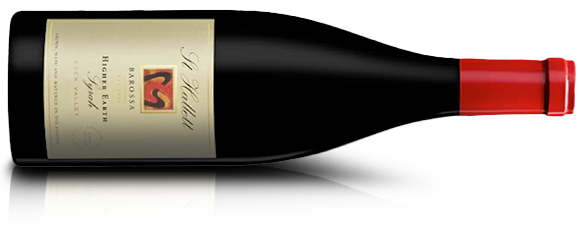 St Hallett Higher Earth Syrah 2018 Stuart McCloskey, tasted May 2025 "Gloriously perfumed bouquet, which is jampacked with raspberry liqueur, blueberry, fig, fresh oak, dried herbs, fresh sage and baking spices.. Aromatics deepen and become more evocative with further aeration - irony seaweed along with graphite. The palate is medium-bodied, the tannins are mellifluous and work in harmony with the succulent fruit. The flavours and textures could glide all day long. Blue and black fruits are ripe and abundant, but with a freshness of acidity that counterbalances perfectly. Immensely charming and high-up on the ‘classy’ list. Clearly, and without stating the obvious, this feels cool climate, silken, slippery, sleek, and seductive. The flavours gently rock and roll you, and she gets better the longer you spend with her. Beautiful drinking and will continue to age for at least a further 5-8 years. Decant for an hour or two. I used Zalto Burgundy glassware as I wanted to keep the bouquet locked in. A word on pricing: I regularly moan about rising prices (justified or not). Current vintages sell for around £30 ($65) per bottle and are worth every penny. We are so fortunate for Accolade / Vinarchy’s continued generosity as this is circa 30% off where it should be. Fabulous wines…" 96 Points (Gold) - Tyson Stelzer, Halliday.com 13 August 2021 "Average 25yo vines from across Eden Valley; matured in seasoned French oak barrels. St Hallett's deep reach into the great sites of the Eden Valley and its blending wizardry forge an exquisite take on this great vintage. At once concentrated and vibrant, spice-laden and enduring. Impeccably constructed tannins draw out a finish of pinpoint detail and lingering persistence." *Cork closure £23.75 per bottle Available for dispatch from Thursday 29th May 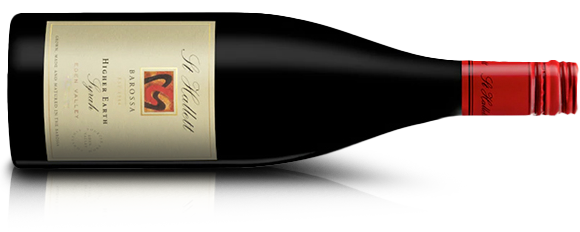 St Hallett Higher Earth Syrah 2019 Stuart McCloskey, tasted May 2025 "Australia is not a one trick pony. Moreover, vintage variation is, as per this release, clearly evident. What a contrast compared to the 2018 (I sampled these side-by-side). There’s a touch more warmth to the bouquet (alcohol levels are the same). Iodine, Chinese five spice, saddle leather, ink, graphite, Autumnal brambling fruits, exotic florals and liquorice. This is seriously brooding, heady, and portrays a wine that was picked during the winter months (of course, it was not). Game notes emerge with more air as does a strong scent of the shoreline and beef broth. I love this. This is so intriguing and difficult to put down. Deeply complex. The palate provides the same silken qualities as the ’18. Flavours are dialled-up a few notches – there’s concentration without being overworked (nothing is forced). I love the interplay between the ripe, black and blue fruits, a soupçon of coffee, and the lengthy tannins which melt away into giddy deliciousness. The finish is remarkable. Actually, I’m not sure it has an end point. This is so sexy and utterly seamless… The polish and sumptuousness are off the scale. Remember, this is all natural and not overdone. Please do not buy on the whim of one-point. Read the notes (mine are dated 16 May 2025) and I spent the morning with both. This is unstoppable and will continue to evolve (for the better) over the next 10-years. Two different wines and two different journeys. Both playing to a specific mood and tempo. Served using Zalto Burgundy glassware…" 95 Points - Dave Brookes, Halliday.com 16 August 2022 "I've been impressed in recent years by the quality of St Hallett's forays into the Eden Valley and their take on syrah from the higher ground. From the dry and low-yielding 2019 vintage, the picture is again one of elegance and grace. The fruit is more in the spectrum of black cherry and dark plum, with plentiful spice, purple floral high-tones and crushed-quartz tannins, impressive detail and clarity, and a finish that lingers nicely with memories of cherry and spice." *Screwcap closure £23.75 per bottle Available for dispatch from Thursday 29th May 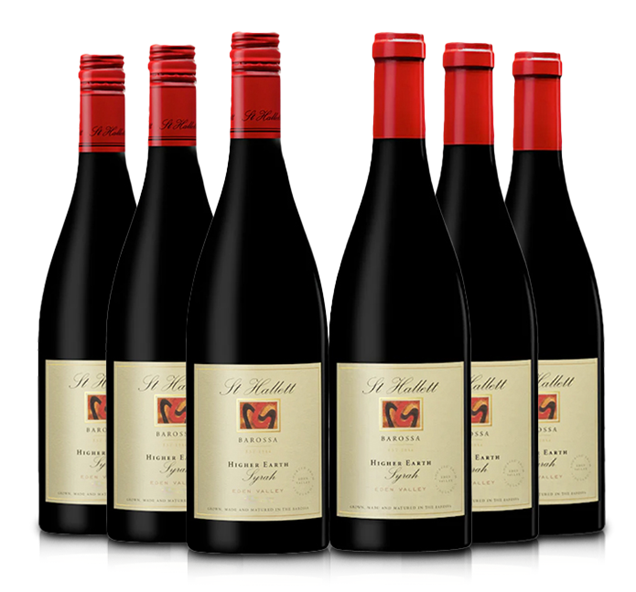 St Hallett Higher Earth Syrah Mixed 6 Pack Contains three bottles of each vintage £125.40 per mixed case (6x75cl) Available for dispatch from Thursday 29th May What’s made the wine news this week? Hawksmoor co-founder reveals £4,500 wine mistake The co-founder of steakhouse chain Hawksmoor has shared details of what happened when two diners were accidentally given a bottle of Bordeaux worth around 20 times more than what they had ordered. The incident, which took place at the Manchester branch of Hawksmoor back in May 2019, received widespread media coverage. Speaking on The Go To Food Podcast with hosts Freddy Clode and Benjamin Benton, Will Beckett shed light on what happened. “In the bar, two guys, ordered a Pomerol, it’s like a spendy bottle of Bordeaux, 200-something quid,” shared Beckett. “She [the server] trots off to a wine room, has a quick look around, grabs a bottle, comes back, opens it, says is this the bottle: ‘Yep, yep, yep’.” “[The server] pours the wine, goes about her business,” Beckett continued. “About an hour, they’re like: ‘can we have another bottle of that?’ She’s like: ‘yeah, yeah, yeah,’ goes back, it’s weird, there isn’t another bottle of that. That doesn’t usually happen.” It then transpired that the pair had been served a bottle of 2001 Château Le Pin, a Merlot-forward (88%) Pomerol which famed wine critic Robert Parker described as “flamboyant, opulently textured, rich, [and] concentrated”. According to Beckett, the server’s reaction to the mishap was initially “oh my f*cking god”. However, she was more composed when speaking with the customers, telling them that they had run out of the bottle they had enjoyed so heartily, prompting them to order an alternative. Shortly after the incident, the Hawksmoor Manchester Twitter account made light of the costly mistake: “To the customer who accidentally got given a bottle of Chateau le Pin Pomerol 2001, which is £4,500 on our menu, last night – hope you enjoyed your evening! To the member of staff who accidentally gave it away, chin up! One-off mistakes happen and we love you anyway.” Speaking on the podcast, Beckett said that footfall after the incident was “mental”: “Hawksmoor Manchester got a massive blip for a couple of weeks – we made way more money with that than we lost by giving away that thing.” Indeed, Hawksmoor Manchester clearly saw the publicity value of the error, promoting the unfortunate server to the role of general manager just a few months later. *Non-restaurant pricing at the time (circa £3,500 per bottle). RunRig: Torbreck’s ode to the Barossa If the Torbreck ethos centres on the preservation of some of the Barossa Valley’s most venerable vineyards, then RunRig is perhaps its most eloquent expression. And these gnarled old Shiraz vines have more going for them than just longevity, as Richard Woodard discovers.  “We’ve got some of the oldest soils in the world – between 450 million and one billion years old – the oldest living culture in the world, the oldest vines in the world… but we’re ‘New World’,” says Torbreck chief winemaker Ian Hongell, with a more than a touch of wry bemusement. There’s long been a disconnect between Australia’s remarkable vinous heritage and the country’s relatively recent rise to global winemaking prominence – and nowhere is that clash more evident than at Torbreck. Even in Australian terms, this is a pretty new winery: established in 1994, with the first vintage of cult Shiraz RunRig following a year later – the wine that, with only its second release in 1999, brought global fame to Torbreck thanks to the acclaim of The Wine Advocate. The intervening period has been eventful, encompassing receivership, acquisition by American businessman Pete Kight and the painful exit of founder Dave Powell. A Barossa native (his family has supplied grapes to Torbreck since 1998), Hongell arrived in 2017, following 18 years at Peter Lehmann and stints at Penfolds, Saltram and Bethany. Nonetheless, he says, the winemaking philosophy underpinning RunRig hasn’t changed in three decades: full physiological ripeness, some lignification of the stalks, 30 months in barrel, 50% new oak. Then a barrel-by-barrel selection of the best wines and the addition of a 2% “dosage” of Viognier from the current vintage (ie RunRig 2022 incorporates 2024 Viognier, and so on). Why the Viognier? “It’s like a poor man’s version of a fining,” explains Hongell. “I like to say that it fills the dimples on a golf ball, and softens the wine after such a long time in wood.” Softness is a relative term for an unashamedly warm-climate red wine that regularly tips the scales at 15.5% ABV. In a drought vintage like 2019, when the valley went 308 days without effective rainfall, RunRig remains a darkly impenetrable showcase for all the power that old-vine Barossa is capable of – the result of that year’s unusually high skin-to-juice ratio, with 500 litres of must per tonne of grapes, versus the typical 620 litres/tonne. This was Torbreck’s concept from the outset: finding old vineyards that were facing the bulldozer or that were the victims of generational change as children walked away from the family farm; then rescuing them and, in some cases, buying them. Beyond historical value, there are sound reasons for cherishing these gnarled, twisted old vines with their eye-wateringly paltry yields. “We value them because the nature of the fruit that comes from them has a resilience that modern fruit just doesn’t have,” explains Hongell. “We get longer hang time, phenolic stability, colour stability and intensity. It takes us to a window that’s cooler in the year, which brings freshness to the wine.” These older vines move past the ‘raisin’ stage and are rehydrated by the cooler, late-season nights. For this reason, the team never samples fruit in the afternoon. “By the morning, the grapes have recovered and plumped up,” says Hongell. “The fruit needs to bounce back and look great.” If Torbreck’s winemaking has changed little in 30-odd years, the same can’t be said for the company’s work in the vineyards. Since before Hongell’s arrival (viticulturist Nigel Blieschke moved across from Peter Lehmann two years earlier), an intensive programme of work has focused on every aspect of vineyard health, from carving out eutypa-affected wood to, most crucially, improving sap flow. Vintage variations give the lie to the idea that the Barossa enjoys dependably consistent growing conditions, year in, year out. Hongell’s time making RunRig has spanned the cool, wet 2017, the ‘Goldilocks’ vintage of 2018, that 2019 drought and, in 2020, 80km/h winds during flowering that cost the winery 60% of its fruit. “The season itself was ok, but there were just no bloody grapes,” says Hongell ruefully. The lush, fleshy 2021 was followed by the first of the La Niña years in 2022 – a challenging year with a positive result. “I was kind of concerned at the time,” recalls Hongell. “We stopped harvesting for two weeks because of rain. We waited, but really pleasingly there’s a floral lift to the wines, beautiful perfume anchored with tannin, stability and substance.” Unlike Torbreck’s single-vineyard wines, The Laird and The Forebear, RunRig is a blend of up to six sites running the length of the Barossa, from Lyndoch in the south to Ebenezer in the north. Three are owned by Torbreck, three are contracted from growers. The common factor is that these are all what Hongell refers to as “heritage clone vineyards” – plots that relate back to the settlement of the Barossa in the late 1830s, and James Busby’s shipping of vine cuttings into Australia from all over the world a little earlier. In hot, dry conditions, compromised sap flow could either kill entire bunches or, more insidiously, cause the grapes to stop accumulating sugars while still being full of acid. “We’ve spent the last 12 years working on sap flow,” says Hongell. “That’s the secret to old vines … There was a period of very much ‘grow it and pick it’. Not any more.” Not working the soils eliminates bare earth between the rows, minimising the impact of reflective heat, while the employment of 12,000 cubic metres of mulch has improved biodiversity, building up carbon levels and retaining soil moisture. The work is a tacit recognition of rising temperatures and more frequent drought years like 2019. When these ancient vines were planted, the region enjoyed more dependable winter and spring rainfall, plus top-up rains of say, an inch in January and an inch in February. Today’s young vines require irrigation – otherwise they probably wouldn’t survive. All of that hard work may be about to bear fruit. Hongell describes the 2025 vintage as “illogical”, with no appreciable rainfall to date – something that concerns him in terms of the likely knock-on effect on yields in 2026. For now, though, he believes that 2025 may be the year when “we get to prove the pudding” in terms of all that viticultural work. He adds: “It wasn’t too hot – that’s been the saving grace. We needed patience as water ran out in the vineyards and things went into a sort of holding pattern. “But old vines are so good at withstanding the heat … These great old vineyards of the Barossa just keep pushing on through.” We will be launching the new Torbreck collection during July / August… 29 bottles remain 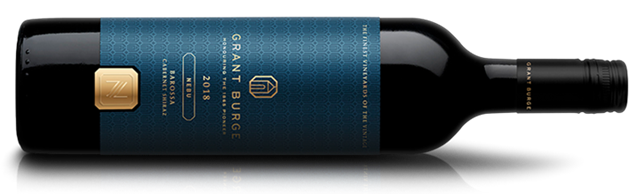 Grant Burge Nebu Cabernet Sauvignon Shiraz 2018 Stuart McCloskey, February 2025 "Heavenly bouquet that ticks every, single box for me… The density and array of aromatics is astonishing – I am not sure whether this is an Aussie wine, a beauty from the Rhône or Burgundy. Kaleidoscopic, aromatic nirvana… I must also comment on the colour, which is akin to falling into a black hole. Back to the bouquet which permeates with blackcurrant compote, cassis, liquorice, sea kelp (there’s a deep ozone influence which is gorgeous), salted / brined black olives, fresh bay leaf, a splash of woodsmoke, cold steel, lead pencil, and the Burgundian influence of a damp forest floor (freshly turned earth). Fresh peppermint and cigar box with more air (Eucalyptus and mushroom / Kombu broth post 30-minutes in the glass). Utterly exquisite, and it keeps getting better! The palate does not disappoint either. This is a feast for all the senses. The texture is silken, and the tannins offer the gentlest of hugs. The 2018 Nebu provides an insight into poise, refinement, working with exemplary fruit, freshness and above all, an overwhelming sense of purity. A compelling, ethereal wine that is comfortably worth its full RRP of £50+ per bottle. The fruits are the blackest of black, (plums, damson, blackcurrant and mulberry) – they are rich, succulent, and wrapped in a sheath of salted minerality. Hermitage-esque qualities come into play with hung, red meat, charcuterie, wood smoke – very grown-up. Umami, graphite tinged, and with a faint twang of blood orange. There is absolutely no need to blather on (which is easy to do) as this is a sublime wine. Excruciatingly, good to great. Actually, one of the best Cab / Shiraz I have ever sampled. Served using Zalto Bordeaux stemware. Drink now to 2040+. *I served mine on the ‘cooler’ side of room temperature, which I strongly recommend…" £35.00 per bottle 18 bottles remain  Aylesbury Estate Q05 Gamay 2022 Stuart McCloskey “The palate is silky, seamless, and perfectly combines fruit richness, sweet spice with a sense of weightlessness – very impressive indeed. " £19.95 per bottle Last 10 bottles  Aylesbury Estate Q05 Arneis 2023 Stuart McCloskey “There’s an Alsace-like feel to the wine... Unquestionably, a striking wine to drink. All-in-all, an outstanding Arneis that will gain more weight over the coming years." £19.95 per bottle |